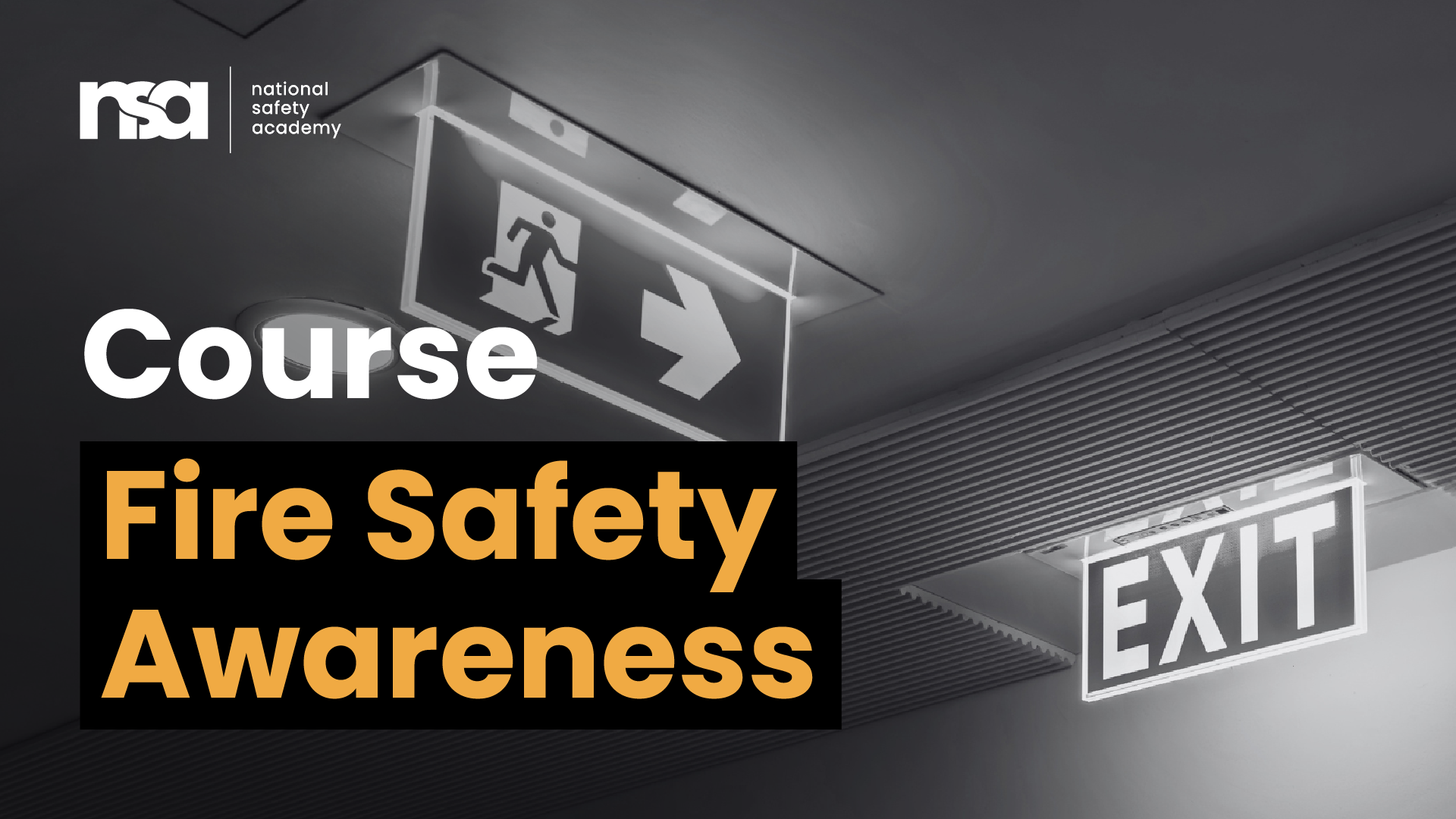
Fire Safety Awareness Course
-
Learning Style
Self-directed, distance learning
-
Time Limit
Must be completed within 3 months
-
Suggested Duration
1-2 hours
-
Here's what you need to know
Course aims
This course has been designed to give you a clear and practical understanding of fire safety in the workplace, and what’s expected of you as an employee.
You’ll build your knowledge step by step, focusing on real-life situations and ways you can help keep yourself and your colleagues safe at work.
Your overall learning objectives are:
Who is it for?
How is it delivered?
This course is designed around real workplace situations, not just information.
You’ll learn through short, focused e-learning modules supported by visual examples. Instead of memorising rules, you’ll work through what actually matters to you as an employee - from spotting risks during day-to-day work to safely evacuating if you hear an alarm. Each module builds on the last, helping you understand not just what to do, but how to apply it in real scenarios.
You’ll learn through short, focused e-learning modules supported by visual examples. Instead of memorising rules, you’ll work through what actually matters to you as an employee - from spotting risks during day-to-day work to safely evacuating if you hear an alarm. Each module builds on the last, helping you understand not just what to do, but how to apply it in real scenarios.
The course is delivered online, so you can work through it at your own pace in your learning portal.
How does the assessment work?
For this course, there are no formal assessments.
Is there a certificate?
Yes! All successful learners will receive a digital certificate upon passing the course.
Hard copy certificates are available upon request for a fee.
Hard copy certificates are available upon request for a fee.
How often should this training be completed?
Your Fire Safety Awareness certificate is valid for 12 months after completion. After this time, the course must be completed again to renew your certificate. The expiry date will be clearly shown on your certificate.
How much does it cost?
The fire Safety Awareness course costs £30 + VAT.
Discounts are available for multiple enrolments. Please contact us for more details.
Hear from our learners...

The course content is excellent, you're learning the legal requirements and how fire actually works and then applying this in a practical, real world, way for the assessments rather than just repeating regulations.
DAVID LEE
HEALTH AND SAFETY MANAGER
GLOBAL LOGISTICS
HEALTH AND SAFETY MANAGER
GLOBAL LOGISTICS
Thus far I have loved the course! It is interesting, in-depth, and has a familiar NCRQ feel that connects real-world situations to practical applications. The team at NSA have done a fantastic job with this course, providing a course that is really needed in the industry. As a experienced fire safety professional and risk assessor, I still found areas to research and learn more about.
daniel luckett CMIOSH
technical compliance manager and fire safety consultant
technical compliance manager and fire safety consultant
I would like to say I think the way the unit one assignments have been designed is perfect. It is not like other exam bodies where you need to give a textbook answer, it introduces you to real-world scenarios. My job is a senior health and safety consultant and the advice emails that we are required to respond to are like what I do receive in real-life.
Neil Hughes-Hutchings
CMIOSH AIFSM
Senior Health and Safety Consultant
AfterAthena
CMIOSH AIFSM
Senior Health and Safety Consultant
AfterAthena
The course content is excellent, you're learning the legal requirements and how fire actually works and then applying this in a practical, real world, way for the assessments rather than just repeating regulations.
DAVID LEE
HEALTH AND SAFETY MANAGER
GLOBAL LOGISTICS
HEALTH AND SAFETY MANAGER
GLOBAL LOGISTICS
Thus far I have loved the course! It is interesting, in-depth, and has a familiar NCRQ feel that connects real-world situations to practical applications. The team at NSA have done a fantastic job with this course, providing a course that is really needed in the industry. As a experienced fire safety professional and risk assessor, I still found areas to research and learn more about.
daniel luckett CMIOSH
technical compliance manager and fire safety consultant
technical compliance manager and fire safety consultant
I would like to say I think the way the unit one assignments have been designed is perfect. It is not like other exam bodies where you need to give a textbook answer, it introduces you to real-world scenarios. My job is a senior health and safety consultant and the advice emails that we are required to respond to are like what I do receive in real-life.
Neil Hughes-Hutchings
CMIOSH AIFSM
Senior Health and Safety Consultant
AfterAthena
CMIOSH AIFSM
Senior Health and Safety Consultant
AfterAthena
Your learning journey